Key points
- A head scan holds the shape of the skin, so software can draw it as a 3D face. In a study of 29 people with head CT, face-recognition software matched 27.5% of those faces to the right photograph.
- In a Mayo Clinic study of 84 people with head MRI, the software picked the right scan as its top match for 70 people (83%) and had it in the top five for 80 (95%).
- Taking the name out of the DICOM header leaves the images, and the face, in the files. Neither study tested CBCT, so no figure here applies directly to a dental scan.
- Hiding the skin in the 3D view changes what the screen shows. The files keep their header and the full volume, and the viewer has no de-identify feature.
Software can rebuild a face from a head scan. In published tests, face-recognition software matched those faces to photographs of the right people. The studies used head CT and head MRI, not CBCT. Taking the name out of the files does not take the face out of the images.
What does a face made from a scan look like?#
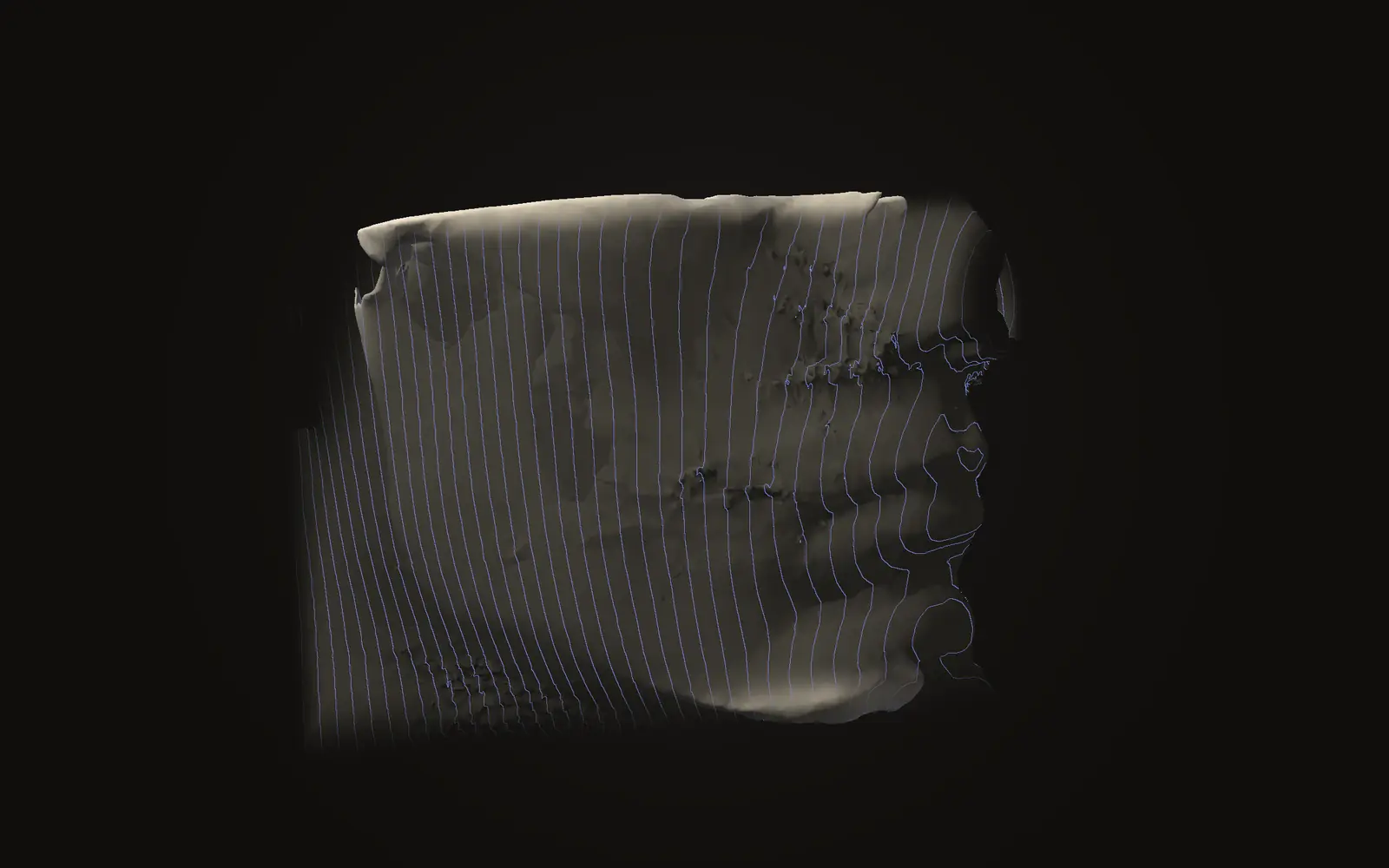
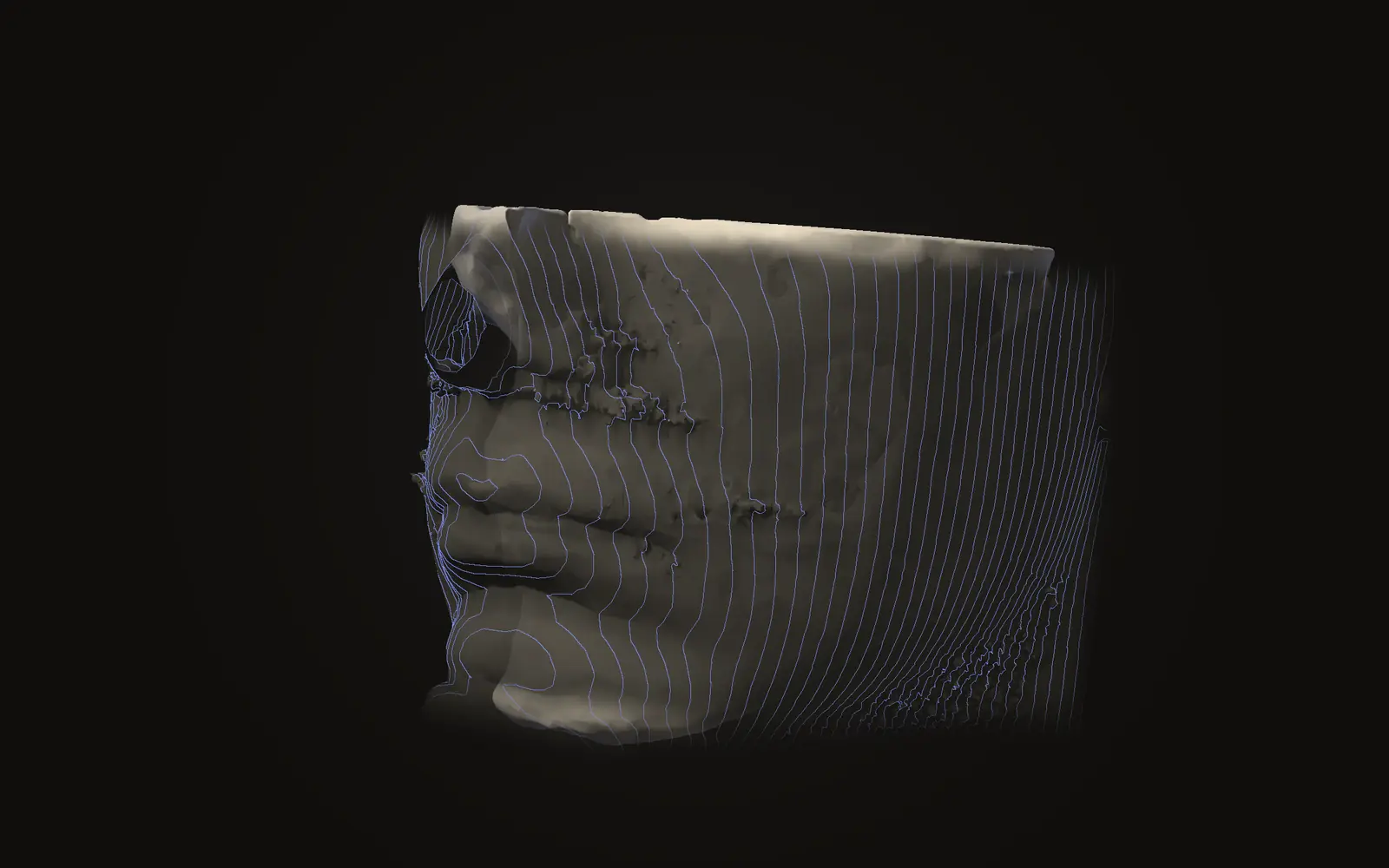
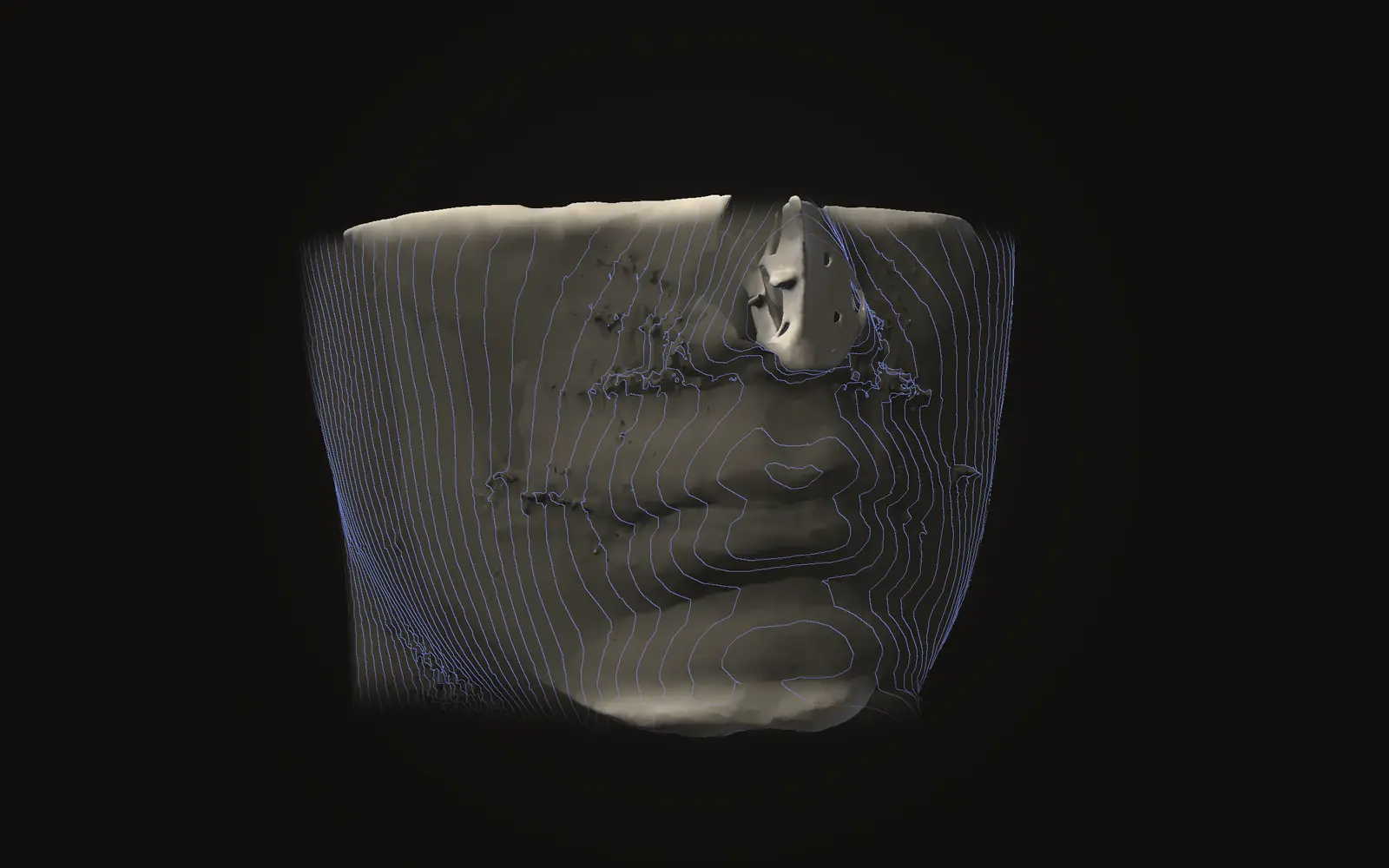
A head scan records where tissue is, and skin is tissue. Software can find the skin surface and draw it as a 3D shape, the same way Jaw Viewer draws it over the bone. The Mayo Clinic group who tested this wrote that 3D rendering software can "generate realistic facial reconstructions from otherwise deidentified imaging data".[1]
The reconstruction is not a photograph. In their MRI work it kept the shapes and relative sizes of facial features, which recognition software uses, but not hair, lighting or skin colour.[1]
What did the studies find?#
Two studies tested this with real participants. Their scanners, software, sample sizes and tasks differed, so the percentages cannot be read as a trend.
| Mazura 2012 | Schwarz 2019 | |
|---|---|---|
| Scan | Head CT | Head MRI |
| People | 29 | 84 |
| Faces rebuilt from the scan | Compared with frontal photographs | Compared with five photographs each |
| Result | 27.5% matched correctly (95% upper confidence limit 40.1%)[2] | Right scan ranked first for 70 of 84 (83%), in the top five for 80 of 84 (95%)[1] |
In the CT study, photographs were added to the pool of possible matches in groups of 50 over later phases, and the software recognised 96.6% of the reconstructions as a face at all.[2] In the MRI study the software ranked a set of 84 faces built from the participants' own scans.[1]
Neither study tested a CBCT scan, so none of these figures describes a dental scan directly. A CBCT volume can be rendered as a surface in the same way (our inference), and in the public sample scan the volume ends below the nose, so the face it shows is partial. These papers did not measure how well software matches a partial face.
Is the name the only thing that identifies a scan?#
No. The header can hold the name and other attributes, and our article on what is inside a DICOM file shows where they sit. The DICOM standard defines a confidentiality profile that lists attributes to remove or replace, and it also expects a de-identifier to make sure no identifying text is burned into the pixel data itself.[3]
Even a correct run of that profile has limits. The standard says that conforming "does not necessarily guarantee confidentiality".[3] The profile works on attributes and burned-in text. The face is made from the image, and the images stay.
Tools exist that blur or remove the face. The MRI authors noted that such software is rarely used, can reduce the quality of measurements made on the images, and may still not fully prevent re-identification.[1]
What does the viewer change?#
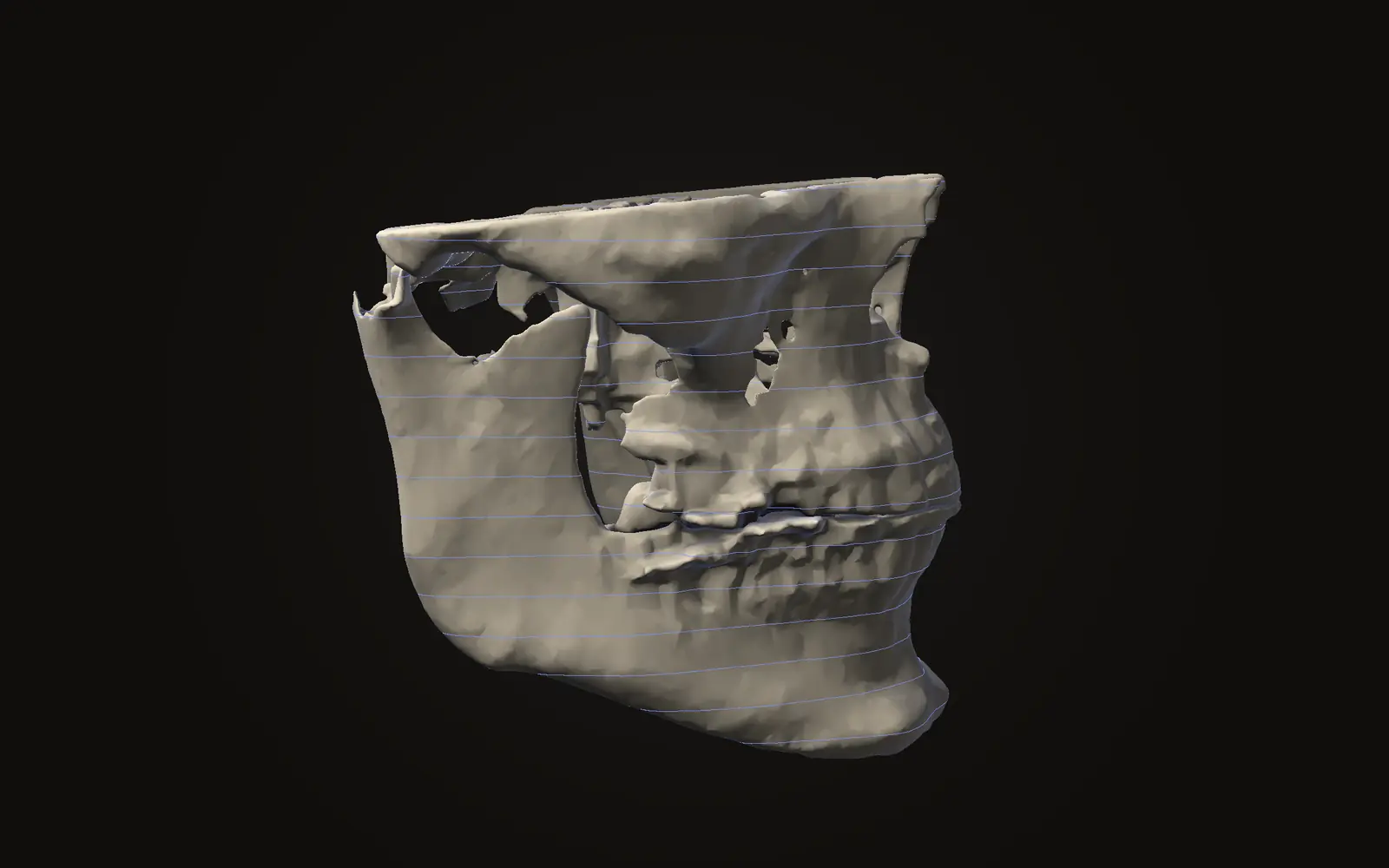
In the 3D view of Jaw Viewer the skin can be shown see-through, as in the picture at the top, or switched off so only bone and teeth show. That changes the picture on screen, and nothing else.
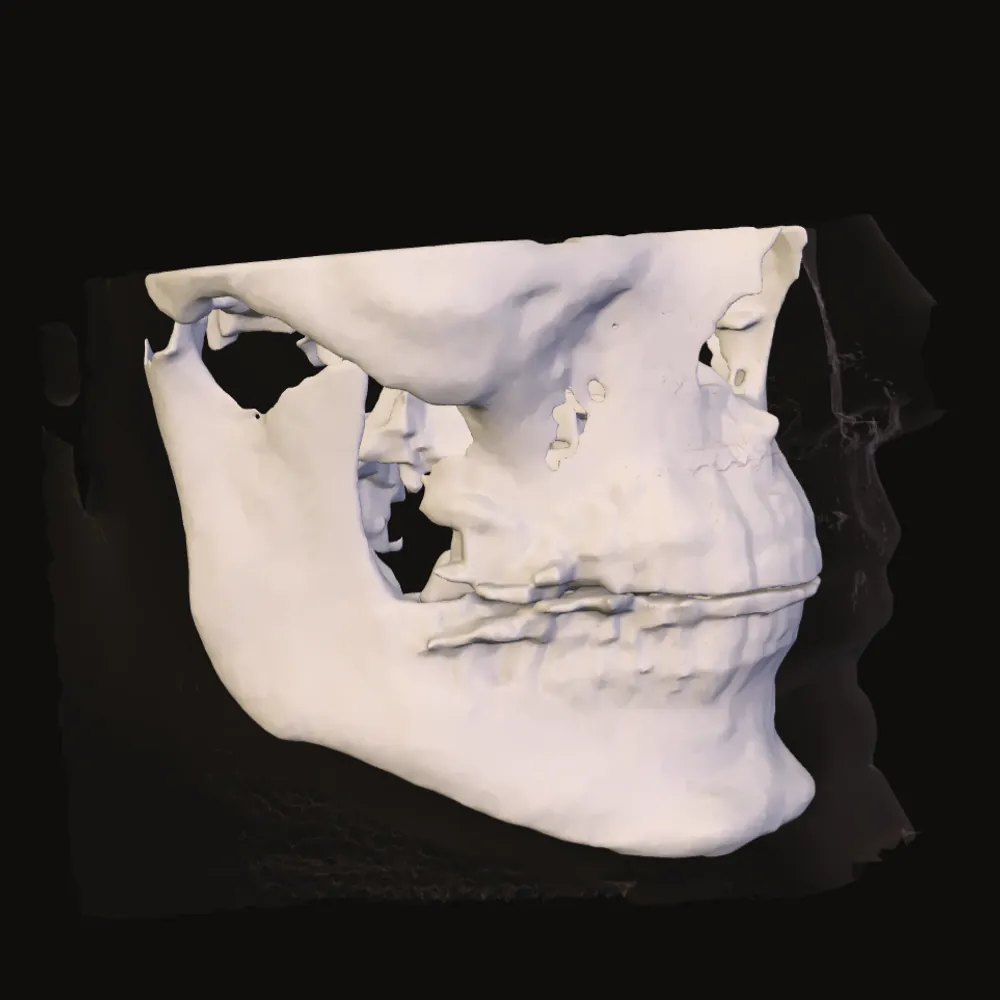
The files on your disk stay as they were. The names stay in the header, and the volume still contains the whole surface of the face. The viewer has no de-identify feature. It also does not send your files anywhere: they are read in the browser tab, and the upload check shows how to confirm that for any viewer.
What does this mean when a scan is shared?#
Anyone who receives the files can render the face again with software of their own, whatever the viewer shows. A scan sent to a second clinician carries the header and the images, which is why sharing a scan for a second opinion starts from what the folder contains. A disc from your clinic holds the same things, as the article on opening a CBCT disc describes.
Under the EU's GDPR, data concerning health is a special category of personal data. Processing it is prohibited unless one of the listed exceptions applies.[4] Whether a face reconstruction counts as personal data in a given case is a legal question that depends on who holds the files and why, and the research above does not settle it.
Can someone identify me from a CBCT or CT scan?
Research shows it can be done for head CT and head MRI, where software matched faces rebuilt from scans to photographs. Neither study used CBCT, and the match rates varied widely between them.
Does removing the patient name make a head scan anonymous?
No. The name sits in the file header, and the images remain. Studies of head CT and MRI found that a face rebuilt from the images alone could still be matched to a photograph.
Does hiding the skin in the viewer anonymise the scan?
No. It changes only what the screen shows. The files on your disk are unchanged and still hold the header and the full volume, which any other software can render again.
Is a scan personal data under the GDPR?
The GDPR lists data concerning health as a special category that may not be processed unless an exception applies. Whether a given face rendering counts is a legal question this article does not answer.
Sources
- Schwarz CG, Kremers WK, Therneau TM, et al. (2019). Identification of anonymous MRI research participants with face-recognition software. N Engl J Med, 381: 1684-6. Letter. 84 volunteers with head MRI (not CT or CBCT).DOIPubMed
- Mazura JC, Juluru K, Chen JJ, et al. (2012). Facial recognition software success rates for the identification of 3D surface reconstructed facial images: implications for patient privacy and security. J Digit Imaging, 25: 347-51. Prospective study of 29 subjects with head CT scans (not CBCT).DOIPubMed
- DICOM Standards Committee (2026). DICOM PS3.15, Security and System Management Profiles, Annex E (Attribute Confidentiality Profiles). NEMA. Read 21 November 2026.Link
- European Parliament and Council of the European Union (2016). Regulation (EU) 2016/679 (General Data Protection Regulation), Article 9, Processing of special categories of personal data. Official Journal of the European Union. Unofficial English copy of Regulation (EU) 2016/679, read 21 November 2026.Link
Terms used
- De-identification
- Removing or replacing the details in a scan file that name a person, such as the name and birth date in the header. It does not change the images, so a face can remain.
This is general information, not medical advice. Jaw Viewer is not a medical device. Talk to your surgeon, orthodontist or radiologist about your own case.