Key points
- Orthognathic treatment combines orthodontic and surgical therapy for severe differences in how the jaws and face are shaped, and it is carried out by a team that includes orthodontists and oral and maxillofacial surgeons.
- Reviews group the movements by stability. Asymmetry correction is stable with rigid fixation and chin repositioning is very stable, while changes over 2 mm occur in a surprisingly large share of people from 1 to 5 years later.
- A 2021 meta-analysis of 7 studies found an overall quality-of-life difference of 16.01 points (95% CI 10.50 to 21.52) between before and after the operation, and the authors concluded the effect is positive.
Orthognathic surgery is an operation that moves the upper jaw, the lower jaw or the chin into a new position. It is used together with braces, as one treatment for severe differences in how the jaws and face are shaped. A review for general dentists calls the combined approach "orthognathic treatment" and describes it as work done by a team, with orthodontists and oral and maxillofacial surgeons at its centre.[1]
What does the treatment consist of?#
The term covers two kinds of treatment used together: orthodontic therapy, and an operation on the bone.[1] The orthodontist moves the teeth. The surgeon cuts the jaw bone, which is called an osteotomy, and fixes the tooth-bearing part in a new position.
Three operations are usually described under this name:
- the upper jaw, cut above the teeth in a Le Fort I osteotomy, described in the article on the upper jaw operation;
- the lower jaw, split along both sides in a bilateral sagittal split osteotomy (BSSO), described in the article on the lower jaw operation;
- the chin, repositioned in a genioplasty, described in the article on the chin operation.
One person can have one of these or a combination. The overview for dentists covers the timing of treatment, the indications and risks of the different osteotomies, the size of the movements that can be achieved and the importance of mandibular autorotation.[1]
Who is it for?#
The same overview describes orthognathic treatment as the gold standard for comprehensive correction of severe dentofacial discrepancies.[1] A dentofacial discrepancy is a mismatch between the jaws, the teeth and the face. The review limits that description to severe cases.
The research does not give a checklist that sorts people in or out. Stability studies group patients by the jaw problem being treated. The 2007 review by Proffit and colleagues names Class II or long-face problems, Class III problems, asymmetry and chin position as the situations whose results it compares.[2] Whether the operation applies to a particular person is a decision for that person and their team, and nothing in these reviews replaces it.
How well does the result hold?#
After the operation, bone heals and the new position has to hold. Proffit and colleagues ranked the types of surgical movement in a hierarchy of stability, looking at operations done with rigid fixation. They found correction of asymmetry stable and repositioning of the chin very stable.[2]
Class II and long-face movements tended to be more stable in the first year than Class III movements. From one to five years, some people in both groups showed skeletal change, and then the Class III group was the more stable one.[2]
The teeth often adapt. Fewer patients show long-term changes in how the teeth meet than in the bone, because the dentition usually adapts to the skeletal change.[2] The article on relapse after jaw surgery goes through the later reviews in more detail.
What do people report about quality of life?#
A 2021 systematic review searched several databases, screened 2,263 articles and kept 12 observational studies. Seven of them could be pooled in a meta-analysis.[3] The studies used two different questionnaires, so the authors pooled each separately.
| Questionnaire | Difference before and after the operation | 95% confidence interval |
|---|---|---|
| OHIP-14 | 7.63 | 1.62 to 13.65 |
| OQLQ | 20.53 | 14.27 to 26.79 |
| Overall | 16.01 | 10.50 to 21.52 |
The two questionnaires are different scales, so their numbers are not comparable with each other. The authors conclude that the operation has a positive impact on quality of life in people with dentofacial deformity.[3] All the included studies were observational, so the figures describe change over time in the people who were studied. They do not describe what the operation causes in an individual.
How does this show on a scan?#
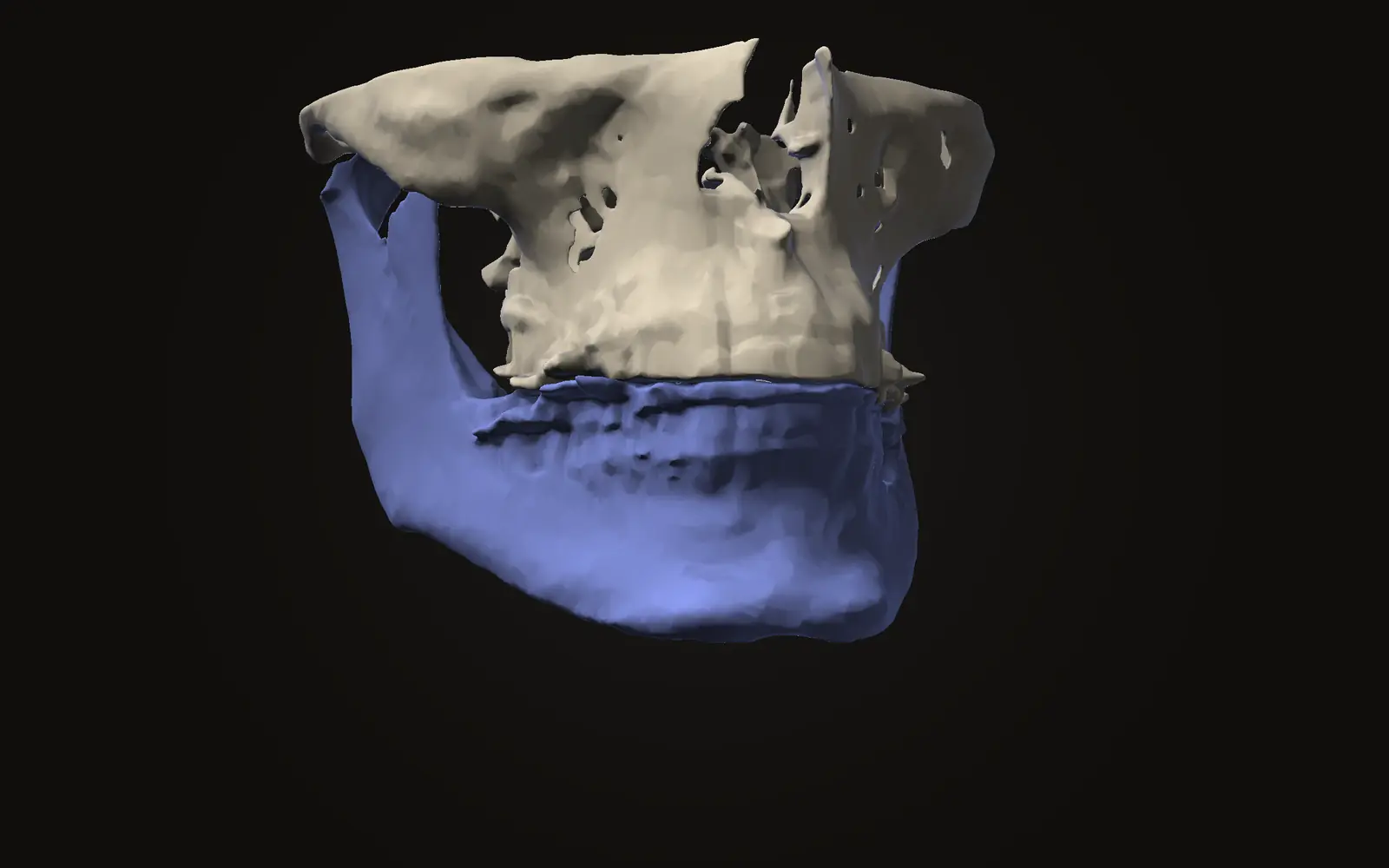
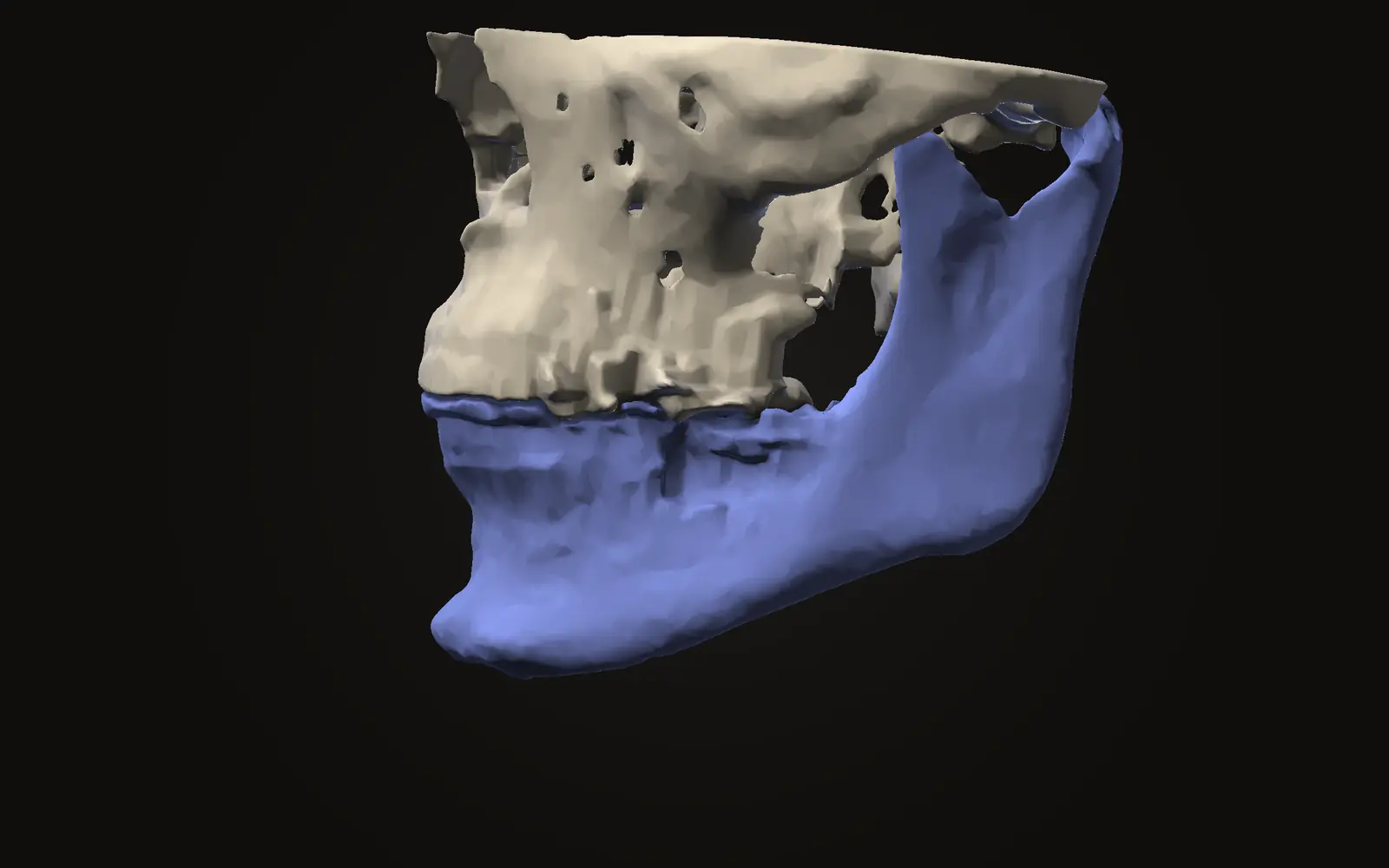
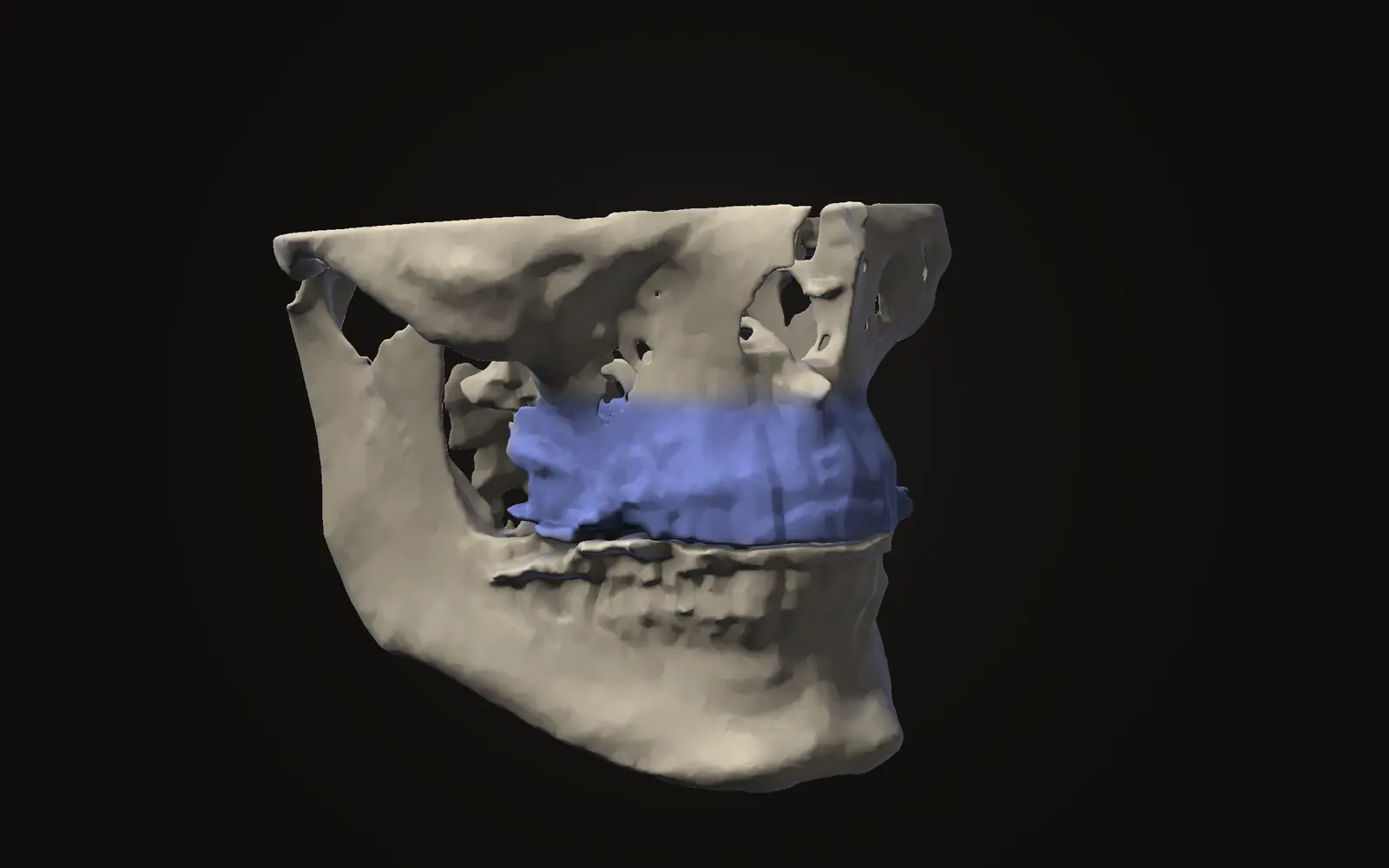
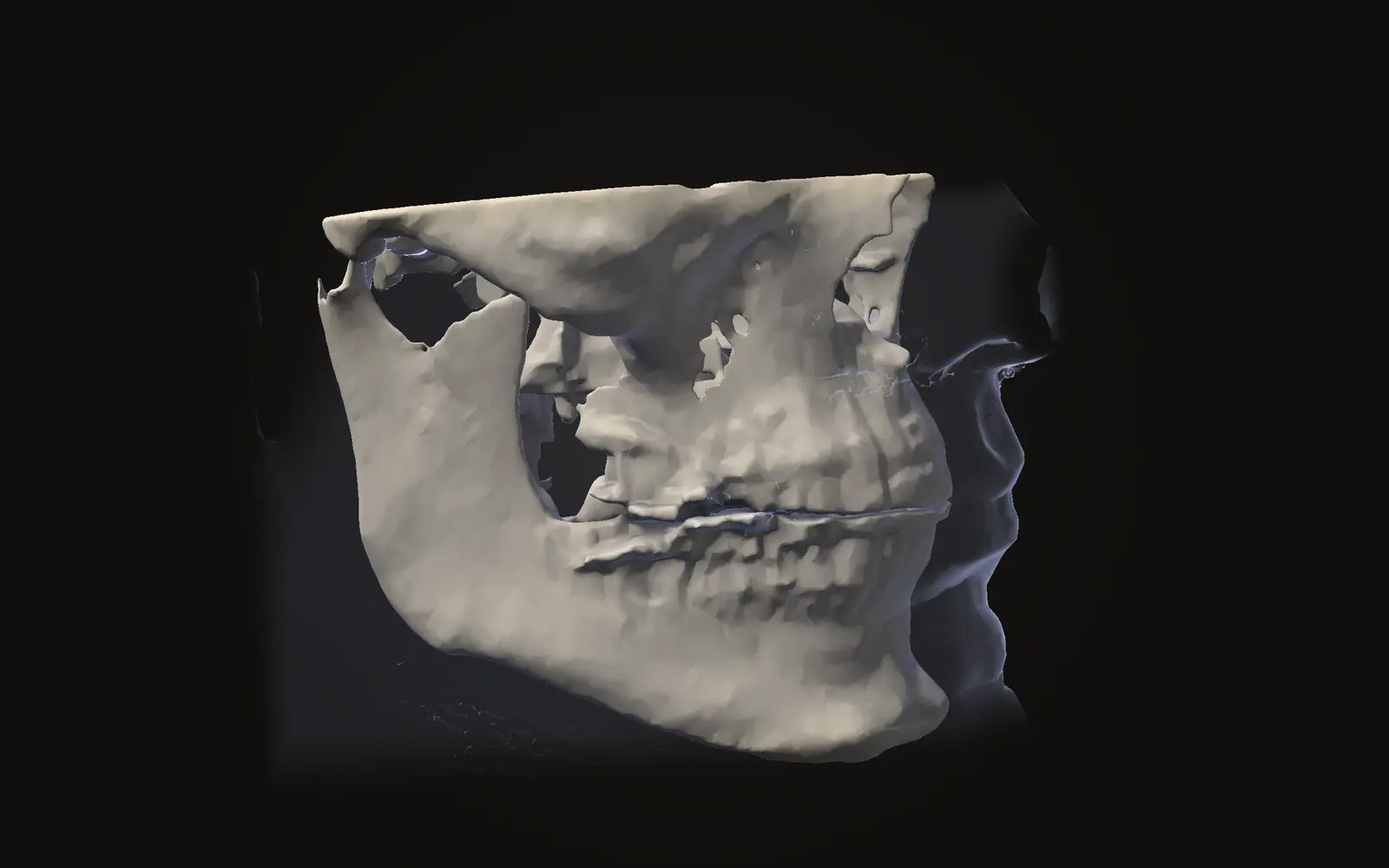
A CBCT scan lets you look at both jaws, the teeth and the skull from any direction, in slices and in 3D. What a CBCT scan shows explains what is visible and what is not. In Jaw Viewer, the view and measure guide covers turning the scan and taking measurements on it.
The viewer shows the scan you give it and measures it. It does not tell you whether you need an operation, which operation fits, or how the result will turn out. For the soft tissue side, see how the lips and chin follow the bone in the reviews that measured it.
Questions people ask#
What is orthognathic surgery?
It is treatment that combines orthodontics and an operation on the jaws, used for severe differences in jaw and face shape. A team of orthodontists and oral and maxillofacial surgeons usually carries it out.
Which jaws can be moved?
The upper jaw (Le Fort I), the lower jaw (BSSO) and the chin (genioplasty). Some people have one of these, some have a combination. Your surgeon decides which applies to you.
Does the jaw stay where it was moved?
Reviews report that stability depends on the type of movement. A 2007 review found changes over 2 mm in a surprisingly large share of people from 1 to 5 years after treatment.
Sources
- Malik OH, Waring DT, Lloyd R, et al. (2016). An overview of the surgical correction of dentofacial deformity. Dent Update, 43: 550-2, 555-8, 561-2. Evidence-based overview written for general dental practitioners. Only the abstract was read.DOIPubMed
- Proffit WR, Turvey TA, Phillips C (2007). The hierarchy of stability and predictability in orthognathic surgery with rigid fixation: an update and extension. Head Face Med, 3: 21. Only the abstract was read.DOIPubMed
- Meger MN, Fatturi AL, Gerber JT, et al. (2021). Impact of orthognathic surgery on quality of life of patients with dentofacial deformity: a systematic review and meta-analysis. Br J Oral Maxillofac Surg, 59: 265-71. 12 observational studies in the review, 7 in the meta-analysis. Only the abstract was read.DOIPubMed
Terms used
- Osteotomy
- A planned cut in a bone.
- Le Fort I osteotomy
- A planned cut through the upper jaw above the teeth, so the whole tooth-bearing part can be moved and fixed in a new position.
- BSSO
- Bilateral sagittal split osteotomy. A planned cut along both sides of the lower jaw that lets the tooth-bearing part slide forward or back.
- Genioplasty
- An operation that cuts and repositions the chin bone.
This is general information, not medical advice. Jaw Viewer is not a medical device. Talk to your surgeon, orthodontist or radiologist about your own case.