Key points
- A review of 59 studies pooled a bad split in 2.3% of splits, infection in 9.6% of patients, removal of plates or screws in 11.2% and lower-lip sensation changes in 33.9%.
- A systematic review of 33 studies counted 458 bad splits among 19,527 split osteotomies in 10,271 patients, 2.3% of splits.
- Reported lip sensation changes range from 12.8% to 33.9% because the studies differ in when they measured and whether they used objective tests or patient reports.
- A meta-analysis found no significant difference in bad splits with third molars present or removed 6 months earlier (odds ratio 1.16, 95% CI 0.73 to 1.85).
Bilateral sagittal split osteotomy (BSSO) is a lower jaw operation in which the bone is cut along both sides so the tooth-bearing part can be moved and fixed in a new position. Reviews of the research report a bad split in 2.3% of splits[1] and lip sensation changes in 12.8% to 33.9% of patients, depending on how and when they were measured.[2][3] This article explains what those terms mean and why the numbers differ.
Where BSSO fits#
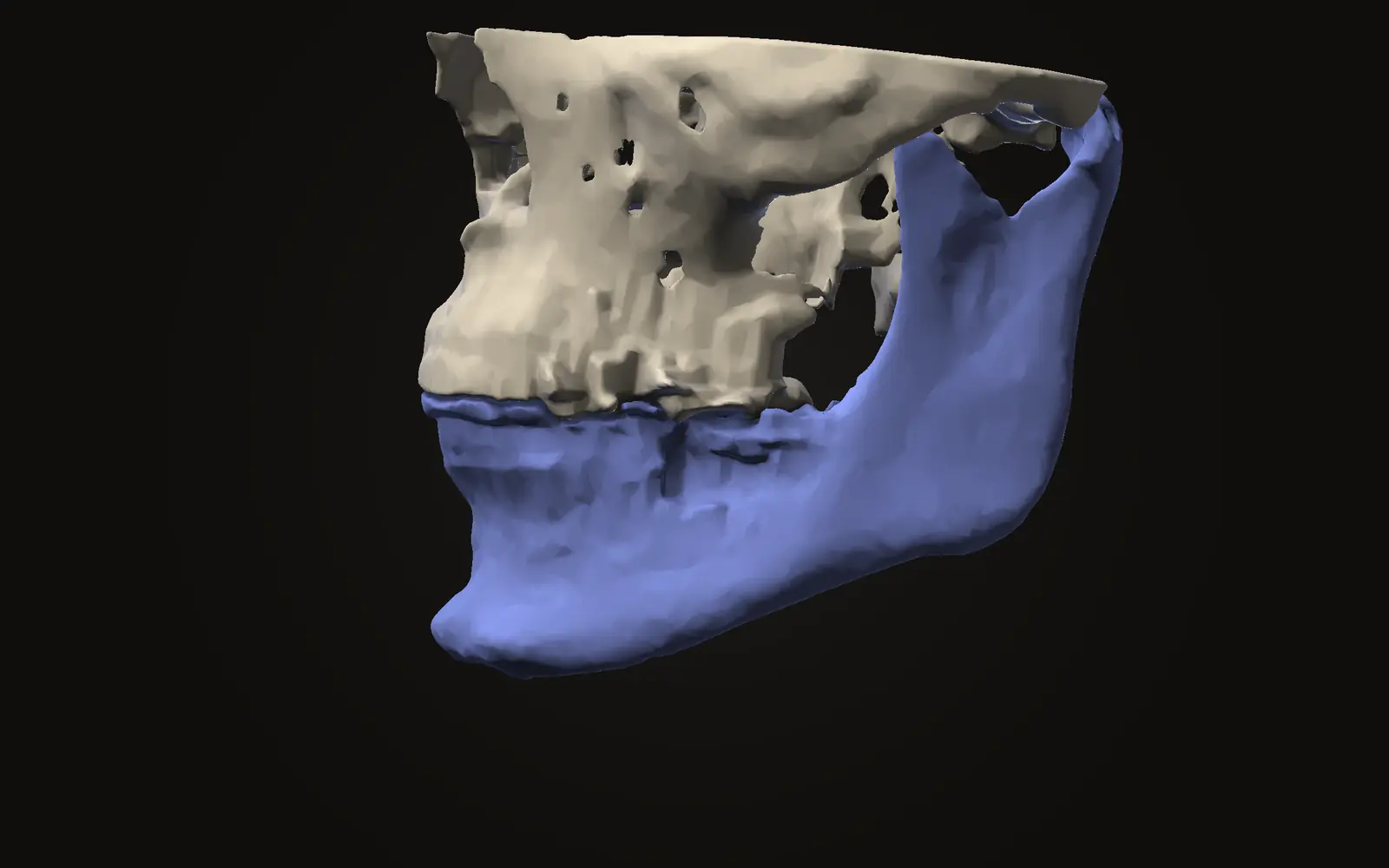
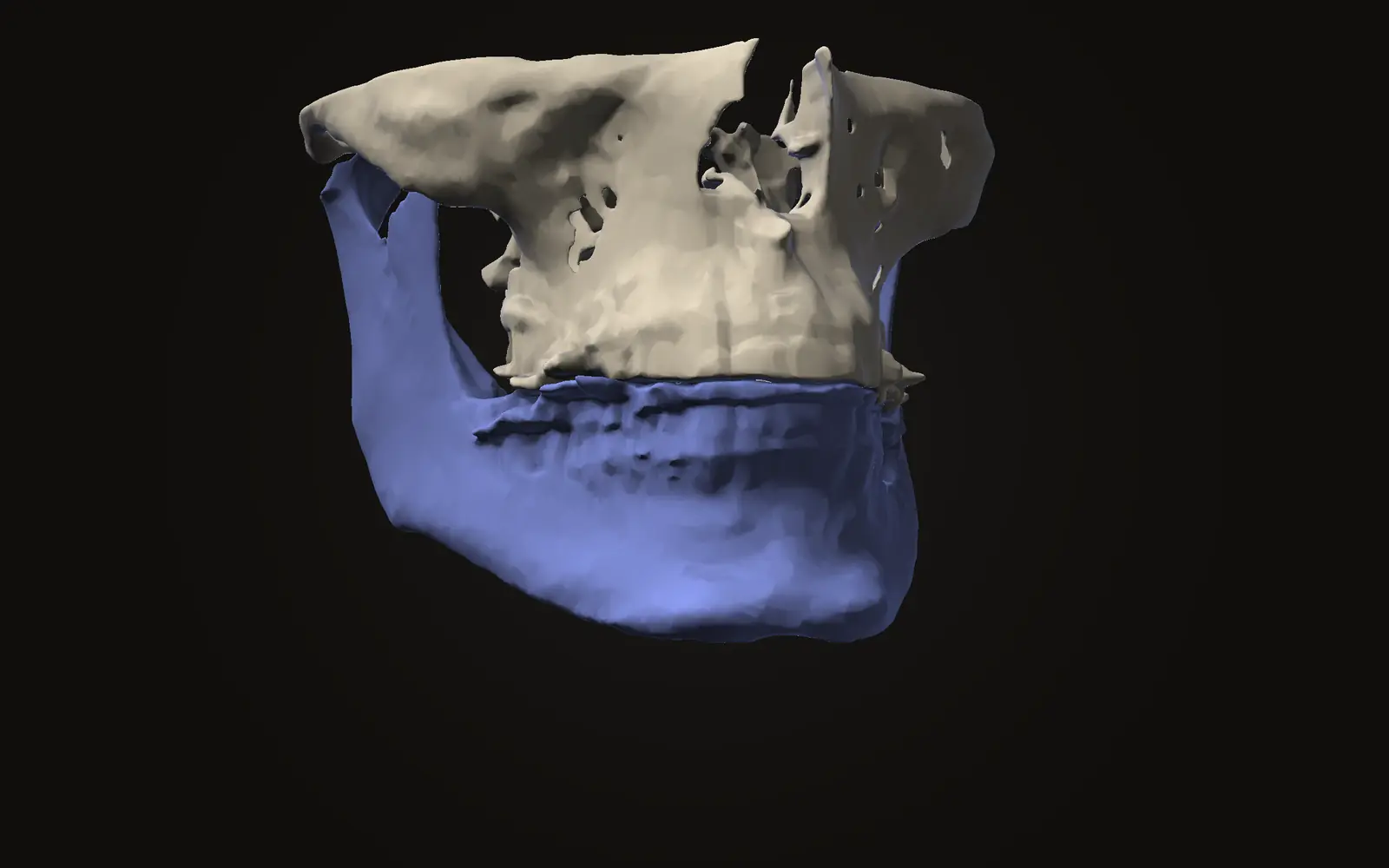
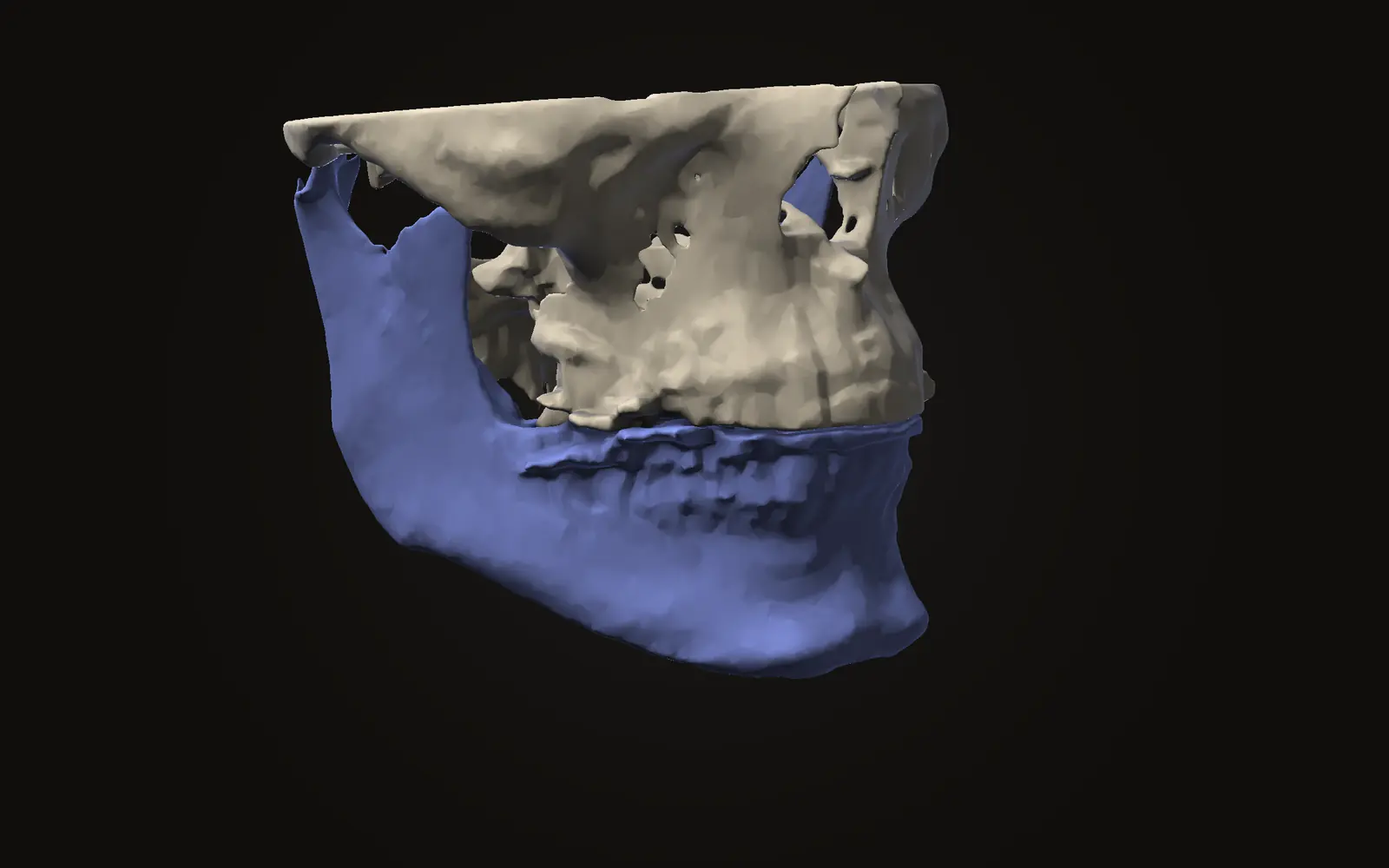
The reviews call the two pieces the cut produces the proximal segment and the distal segment.[1] BSSO is one of several jaw operations; the others are covered in the overview of orthognathic surgery, and the upper jaw counterpart is the Le Fort I osteotomy. How far the lower lip and chin follow the bone is a separate question, taken up in soft tissue changes after jaw surgery.
What is a bad split?#
A bad split is an unfavourable and unanticipated pattern of the split.[1] It means the bone broke somewhere other than along the intended line. A 2016 systematic review of 33 studies published between 1971 and 2015 counted 458 bad splits among 19,527 split osteotomies in 10,271 patients, an incidence of 2.3% of splits.[1]
Each patient has two sides, so 2.3% of splits is not the same as 2.3% of patients.
The same review sorted the reported patterns. The most frequent were fractures of the outer (buccal) plate of the proximal segment and fractures of the inner (lingual) side of the distal segment. Fractures of the coronoid process and of the condylar neck were seldom reported.[1] The authors note that different patterns may need different salvage approaches.[1]
How common are the other complications?#
A 2016 literature review and meta-analysis pooled 59 studies and computed a mean incidence for each of four common complications.[3]
| Complication | Pooled mean incidence | Counted per |
|---|---|---|
| Bad split | 2.3% | split (SSO) |
| Postoperative infection | 9.6% | patient |
| Removal of plates or screws | 11.2% | patient |
| Lower-lip neurosensory disturbance | 33.9% | patient |
Pooling mixes studies that defined and measured each complication in their own way. The figures describe the pooled studies; they do not give the risk for an individual.
Do age or wisdom teeth change the risk of a bad split?#
Papers name several risk factors: the patient's age, smoking, third molars, the surgical technique and the type of plates and screws.[3] A second 2016 review looked at three of them across 30 studies. It found a statistically significant but weak correlation between higher average age and more bad splits in 18 studies (Spearman's rho 0.229).[4] It found no studies that compared splitting techniques head to head.[4]
For third molars, a meta-analysis of seven cohort studies compared patients who had them removed during the operation with patients who had them removed at least 6 months earlier. The difference in bad splits was not significant (odds ratio 1.16, 95% confidence interval 0.73 to 1.85).[4] The authors conclude that there is no robust evidence that any risk factor influences how often a bad split happens.[4]
Why do the lip numbness figures range so widely?#
The inferior alveolar nerve runs through a canal in the lower jaw and supplies feeling to the lower lip and chin. Reported changes in that feeling after BSSO go from 12.8% to 33.9% in the studies above, and the gap has reasons.
First, the time point. A 2007 review of seven studies measured with objective tests found impairment in 63.3% of patients at day 7 and 12.8% at 1 year.[2] Second, the method. The same review found that patient reports gave higher figures than objective tests at every follow-up: 83% at day 7 and 18.4% at 1 year.[2] The 33.9% figure is a pooled mean per patient across 59 studies that each defined and timed the measurement their own way,[3] so it is not directly comparable with a 1-year figure.
Reporting also varies. A review of 61 reports found that 16 (26%) did not state the incidence of nerve injury and 22 (36%) did not assess the nerve before the operation. Its authors attribute the wide variation to a lack of standardised assessment and reporting.[5] More on this topic is in lip numbness after BSSO.
The lower jaw and its nerve canal on a scan#
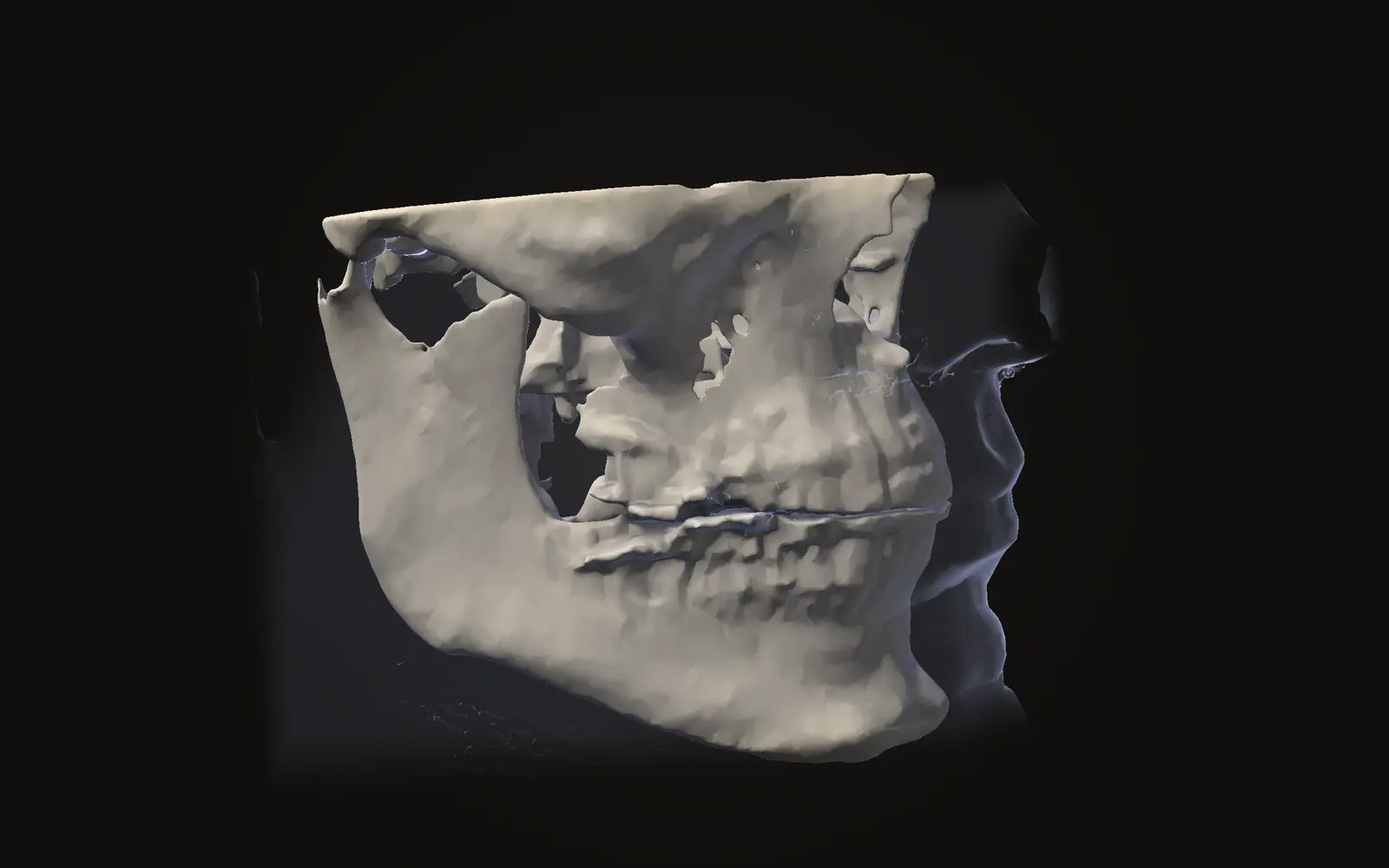
On a CBCT scan, Jaw Viewer lets you scroll the lower jaw in slices, turn it in 3D, and trace the nerve canal yourself. How the canal is traced, and what limits that, is described in the nerve canal on CBCT. The measurements follow the voxel size of your scan, so how closely the canal can be followed depends on it. The guide to viewing and measuring covers the tools.
The viewer shows where the canal runs in the images. It says nothing about how the nerve works, how a split might go, or what the numbers above mean for your case.
What these numbers do not tell you#
The reviews pool studies from 1971 to 2015 that used different techniques, fixation and definitions.[4] Most of the cohorts in the risk-factor review were retrospective: 22 of 30 studies.[4] The numbers describe groups, and surgical practice has changed since many of the studies were done. They are background for a conversation with your surgical team, who know your jaw and your history.
What does BSSO stand for?
Bilateral sagittal split osteotomy. It is a cut along both sides of the lower jaw that lets the tooth-bearing part be moved forward or back and then fixed in its new position.
How common is a bad split in BSSO?
A systematic review of 33 studies counted 458 bad splits among 19,527 split osteotomies, which is 2.3% of splits. The percentage is per split, and each patient has two sides.
Does lip numbness after BSSO go away?
Studies differ. One review found impairment in 63.3% of patients at day 7 by objective tests and 12.8% at 1 year. Patient reports gave 83% and 18.4%.
Do wisdom teeth make a bad split more likely?
A meta-analysis of seven cohort studies found no significant difference between patients with third molars present and those who had them removed 6 months earlier (odds ratio 1.16, 95% CI 0.73 to 1.85).
Sources
- Steenen SA, Becking AG (2016). Bad splits in bilateral sagittal split osteotomy: systematic review of fracture patterns. Int J Oral Maxillofac Surg, 45: 887-97. Systematic review of 33 studies published between 1971 and 2015.DOIPubMed
- Colella G, Cannavale R, Vicidomini A, et al. (2007). Neurosensory disturbance of the inferior alveolar nerve after bilateral sagittal split osteotomy: a systematic review. J Oral Maxillofac Surg, 65: 1707-15. Seven studies.DOIPubMed
- Verweij JP, Houppermans PN, Gooris P, et al. (2016). Risk factors for common complications associated with bilateral sagittal split osteotomy: a literature review and meta-analysis. J Craniomaxillofac Surg, 44: 1170-80. Literature review and meta-analysis of 59 studies.DOIPubMed
- Steenen SA, van Wijk AJ, Becking AG (2016). Bad splits in bilateral sagittal split osteotomy: systematic review and meta-analysis of reported risk factors. Int J Oral Maxillofac Surg, 45: 971-9. 30 studies; 22 retrospective cohorts, 6 prospective cohorts, 1 matched-pair analysis, 1 case series.DOIPubMed
- Agbaje JO, Salem AS, Lambrichts I, et al. (2015). Systematic review of the incidence of inferior alveolar nerve injury in bilateral sagittal split osteotomy and the assessment of neurosensory disturbances. Int J Oral Maxillofac Surg, 44: 447-51. 61 reports published between 1990 and 2013.DOIPubMed
Terms used
- BSSO
- Bilateral sagittal split osteotomy. A planned cut along both sides of the lower jaw that lets the tooth-bearing part slide forward or back.
This is general information, not medical advice. Jaw Viewer is not a medical device. Talk to your surgeon, orthodontist or radiologist about your own case.